Vortrag
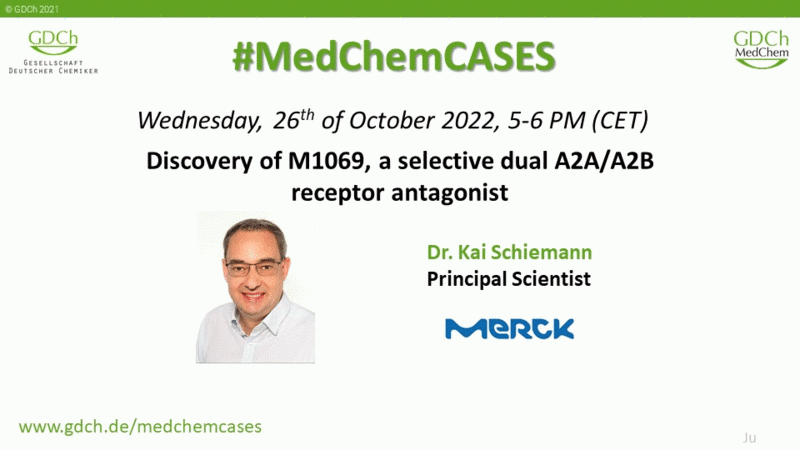
Discovery of M1069, a highly selective dual inhibitor of adenosine A2a/A2b receptors
Veranstaltungen
26.10.22
15:00 – 16:00
Medizinische Chemie
Dies ist ein Online Event
Dr. Kai Schiemann
Merck KGaA
While the A2A adenosine receptor has been considered a major contributor to adenosine mediated tumor immunosuppression, the A2B receptor has recently emerged as another potential therapeutic target. Considering the importance of both targets, we developed M1069 as a selective dual antagonist of the A2A and A2B adenosine receptors to counteract the immunosuppressive effects of adenosine signaling and stimulate anti-tumor immune responses in patients with advanced malignancies.
M1069 was discovered through the medicinal chemistry optimization of a thiazolo[4,5-c]pyridin-2-amine scaffold. The binding mode was confirmed by X-ray structure analysis of close derivatives of M1069 in a complex with the A2A receptor domain. Initial cellular optimization resulted in a very high A2AR potency and a low potency for A2BR. Homology models of the A2BR, along with docking into the published A1R, supported further optimization. Increasing the potency on A2BR was a major challenge, which required some fine-tuning of the substituents, while keeping a high split ratio to the A1R, which was defined as an exclusion criterion to avoid unwanted side-effects. Finally, potent dual and selective A2A/A2B antagonists were further profiled. Surprisingly, some of these showed species’ differences in human and murine T cells, as well as myeloid cells at high (10 µM) NECA (stable analog of adenosine) concentrations and needed to be excluded from the evaluation of in vivo pharmacology using murine tumor models. In contrast, M1069 demonstrated dual A2A and A2B antagonist activity in assays with both human and murine immune cells, favorable physchem/ADME properties, good PK in various species and predicted minimal brain penetration in humans.
Preclinically, M1069 has demonstrated superior activity in comparison to A2A-selective reference antagonists in high (10uM) NECA/adenosine settings in vitro, which translated into superior anti-tumor activity for M1069 in vivo in the 4T1 tumor model. In addition, M1069 showed combination activity with the chemotherapeutic agents’ cisplatin and paclitaxel in the 4T1 tumor model. These preclinical data are consistent with a primary mechanism of action of M1069 that involves the reversal of immune suppression via dual antagonism of pro-tumorigenic A2A and A2B adenosine receptors in an adenosine rich TME, where A2B could act complementary, or compensatory to A2A. Together, this data suggests higher potential for dual A2A/A2B antagonism of M1069 compared to A2A antagonism to block the immune-suppressive/pro-tumorigenic impact of adenosine.
M1069 is currently being evaluated as a monotherapy in a Phase I, first-in-human clinical trial in patients with advanced solid tumors (NCT05198349).
Kontaktperson

Alexander Lorey
Zu Ihrem Kalender hinzufügen


In andere Kalender herunterladen
Interessen
Medizinische Chemie
Veranstaltungsdetails
26.10.22
15:00 – 16:00
Medizinische Chemie
Dies ist ein Online Event
Dr. Kai Schiemann
Merck KGaA
Kontaktperson
Alexander Lorey
Zu Ihrem Kalender hinzufügen
In andere Kalender herunterladen