
Career
Career orientation
Job market
Salary information and income survey
Academy
Mentoring
Education
Learners and trainees
Students and doctoral candidates
Teachers
University statictics
Scholarships
Community
Divisions
Local Sections
Regular's table
Chem_Connect
Equal opportunities, diversity
International activities and cooperations
Membership
Discover
Top topics
Nachrichten aus der Chemie
Brochures and scientific publications
Fascination with chemistry
Statements and position papers
Press releases
Events
Conferences
Local events
Academy
Awards
Prizes
Historical sites of chemistry
About
Board and other bodies
Office
Statutes
Angewandte Chemie and Chemistry Europe
Foundations
ChemRXiv
Top topics chemistry degree programmes and university teaching
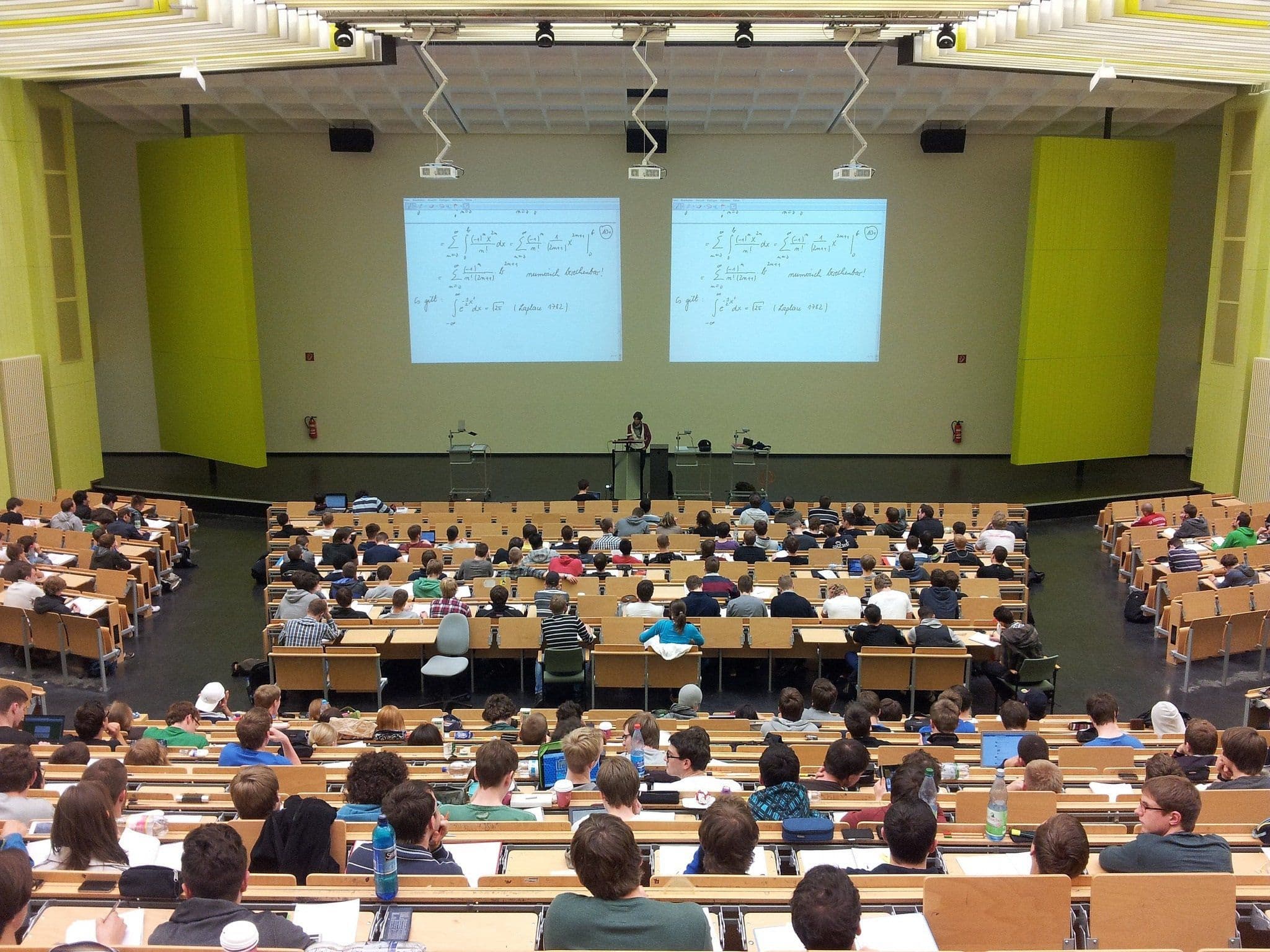
Teachers encounter fake news, scientific scepticism and misconceptions in the classroom. Tackling these usually requires an interdisciplinary approach - but this seems to be almost non-existent in chemistry teacher training programmes. Why it makes sense to change this. Article by Christian Nadegger in Nachrichten aus der Chemie. (Access for members in the GDCh app at https://gdch.app/article/politische-bildung-fuer-werdende-lehrkraefte-egal-oder-essenziell-4148101)
The position paper, jointly published by DECHEMA, GDCh, GBM, VAA and VDI, calls on industry, science and politics to take joint action to combat the shortage of skilled workers in the STEM sector. It was presented on 12 June 2024 during ACHEMA in Frankfurt.
In a joint white paper, the German Chemical Society (GDCh) and the Conference of Chemistry Departments (KFC) express their concern that the importance of experimental teaching in schools is declining. The white paper analyses the shortcomings in schools in Germany and proposes solutions for better support of experimental chemical education in schools.
The position paper from the mathematics and science societies in Wissenschaft-verbindet calls on politicians and school authorities to create qualified further training programmes for teachers of mathematics and science subjects and to make it easier for them to participate during regular working hours.
With this catalogue of topics, the Chemistry Study Commission of the German Chemical Society (GDCh) takes stock of the six-semester Bachelor's degree in Chemistry at universities and points out future perspectives. About the recommendations
Published by:Bundesarbeitgeberverband Chemie e.V. (BAVC), Deutsche Bunsen-Gesellschaft für physikalische Chemie e.V. (DBG), Gesellschaft für Chemische Technik und Biotechnologie e.V. (DECHEMA), Gesellschaft für Biochemie und Molekularbiologie e.V. (GBM), German Chemical Society e.V. (GDCh), Industriegewerkschaft Bergbau, Chemie, Energie (IG BCE), Verband angestellter Akademiker und leitender Angestellter der chemischen Industrie e.V. (VAA), and Verband der Chemischen Industrie e.V. (VCI) To the position paper
The GDCh and six other associations present their demands on teaching in the Gymnasium. To the position paper
The results of the closed conference at the Evangelische Akademie Tutzing in September 2016 are are summarised in a brochure.
The catalogue of topics for the six-semester Bachelor's degree in Chemistry at Universities contains an inventory of the core content of the modern Bachelor's degree in Chemistry, covering around four semesters, as well as optional curriculum components. To the recommendations
The GDCh collects extensive annual data on the number of chemistry students in the various study programmes, the number of examinations taken, their assessments and the duration of study. It also regularly collects data on habilitations, habilitation candidates and junior professorships at German universities, as well as the proportion of female C3 and C4 professors. Further information