
Career
Career orientation
Job market
Salary information and income survey
Academy
Mentoring
Education
Learners and trainees
Students and doctoral candidates
Teachers
University statictics
Scholarships
Community
Divisions
Local Sections
Regular's table
Chem_Connect
Equal opportunities, diversity
International activities and cooperations
Membership
Discover
Top topics
Nachrichten aus der Chemie
Brochures and scientific publications
Fascination with chemistry
Statements and position papers
Press releases
Events
Conferences
Local events
Academy
Awards
Prizes
Historical sites of chemistry
About
Board and other bodies
Office
Statutes
Angewandte Chemie and Chemistry Europe
Foundations
ChemRXiv
History of chemistry
Chemistry has a history that continues to be written every day. The rapid development of the natural sciences, and therefore also of chemistry, presents society with new challenges. Only those who know their history can successfully shape the future, because the progress of science is based not only on current research, but also on tradition. From the examples of the past, we learn to moderate technological and knowledge leaps in such a way that they take people with them and provide the best benefits for society.
Shortlink to this page: www.gdch.de/geschichte
We are a dedicated community of around 400 chemists, historians of science, teachers and students interested in the rich history of chemistry.
Our tasks are:
In order to achieve this, we promote contacts and exchanges of experience among members and with colleagues abroad. We organise a Conference on the history of chemistry every two years at different locations, publish the Mitteilungen as a publication organ for chemical history papers and support the work of the GDCh Commission "Historical Sites of Chemistry". We work closely with other GDCh Divisions, in particular the JCF (JungesChemieForum), the FG Chemieunterricht and the Senior Expert Chemists.
The Board consists of the Chairman, his deputy and at least one but no more than five assessors.
more
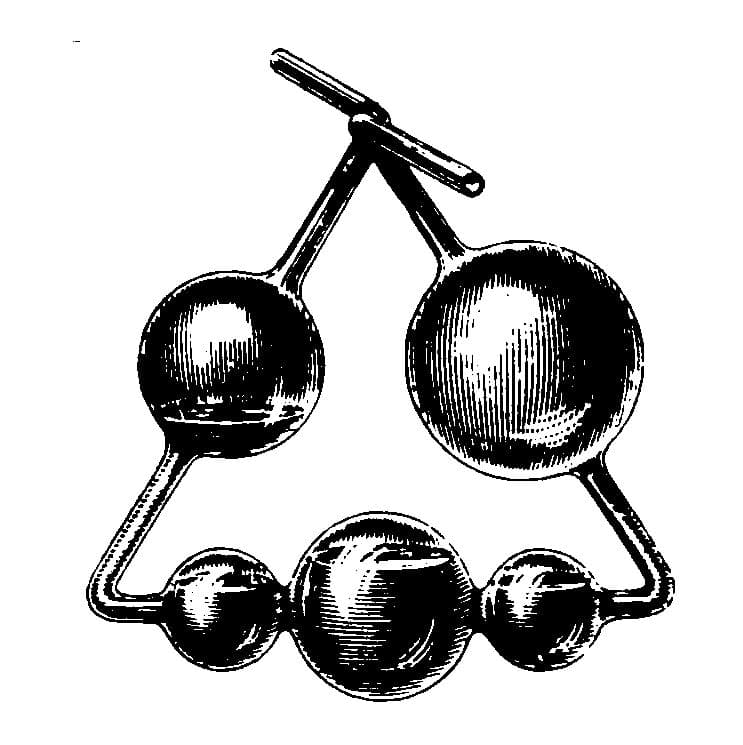
The five-ball apparatus developed by Justus Liebig in 1830 simplified chemical elemental analysis and enabled research-based laboratory teaching. The instrument, also known as the potassium apparatus, soon became an international symbol of the chemical profession's self-image. Anyone interested in the operation and performance of the five-ball apparatus should refer to: Melvyn Usselman, Alan Rocke, Christina Reinhart, Kelly Foulser, "Restaging Liebig. A Study in the Replication of Experiments", Annals of Science 62 (2005), 1-55.
19.03. - 20.03., Lübeck
more
Thu, 19 March 2026, 4:30 pm, Lübeck
Agenda
FG History of chemistry more
In cooperation with the Division of History of Chemistry
more
GDCh programme to honour achievements in chemistry of historical significance since 1999
more
Declaration of the historical Divisions of the German Natural Science Societies
more
GDCh Office
Dipl.-Biol. Nicole Bürger
+49 69 7917-231