
Career
Career orientation
Job market
Salary information and income survey
Academy
Mentoring
Education
Learners and trainees
Students and doctoral candidates
Teachers
University statictics
Scholarships
Community
Divisions
Local Sections
Regular's table
Chem_Connect
Equal opportunities, diversity
International activities and cooperations
Membership
Discover
Top topics
Nachrichten aus der Chemie
Brochures and scientific publications
Fascination with chemistry
Statements and position papers
Press releases
Events
Conferences
Local events
Academy
Awards
Prizes
Historical sites of chemistry
About
Board and other bodies
Office
Statutes
Angewandte Chemie and Chemistry Europe
Foundations
ChemRXiv
Fluorine chemistry
Fluorine plays a more prominent role than any other element in many areas of chemistry, life sciences, technology, industry and modern life. Fluorine reacts with almost every element and, in principle, fluorine atoms can be incorporated into any organic molecule, meaning that fluorine can form the most compounds of all the elements. When H or OH is replaced by F in organic molecules, the bond energies and bond polarisations change considerably, and so do the properties. Synthetic fluoroorganics are therefore of increasing importance in active pharmaceutical ingredients, crop protection agents, lubricants and anti-corrosion agents, dyes, liquid crystals, surfactants, ionic liquids, blood substitutes, etc. The most thermally and chemically resistant polymers are fluoropolymers and their derivatives. Ionomers such as Nafion are of great importance in fuel cells and electrolytes. Low-molecular CHF compounds are also produced on a million tonne scale as substitutes for CFRPs and are used as refrigerants, propellants, fire retardants and solvents. Without SF6 as an insulating gas, modern high-voltage and energy technology would be inconceivable; the production of semiconductor chips would also not be possible without high-purity hydrofluoric acid and fluorine-containing plasma etching gases. Graphite fluoride and electrolytes with fluorinated anions are important components in electrochemical energy storage systems.
Shortlink to this page: www.gdch.de/fluorchemie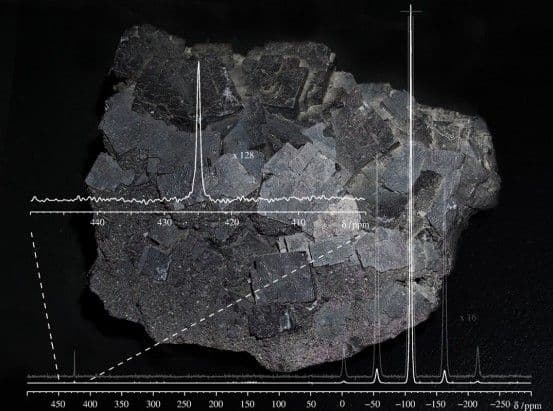
As the above examples show, fluorine chemistry is an interdisciplinary science with links to existing Divisions of the GDCh Division. with electrochemistry (electrofluorination, electrochemical energy storage), magnetic resonance (19F-NMR spectroscopy), solid-state chemistry and materials research (complex fluorides, fluorine glasses) and medicinal chemistry (fluorinated active ingredients, 18F-positron emission tomography), to name but a few.
For this reason, the Board of Directors of the GDCh approved the formation of a Working Group Fluorochemistry under the umbrella of the GDCh in 2008. Details can be found in the bylaws.
The Working Group Fluorine Chemistry of the German Chemical Society awards the "Publication Award Fluorine Chemistry" every two years. The prize is awarded on the occasion of a symposium
14-16 September, Schmitten im Taunus more
Publication Award Fluorine Chemistry
more
GDCh Office
Dipl.-Biol. Nicole Bürger
+49 69 7917-231
n.buerger@gdch.de