
Career
Career orientation
Job market
Salary information and income survey
Academy
Mentoring
Education
Learners and trainees
Students and doctoral candidates
Teachers
University statictics
Scholarships
Community
Divisions
Local Sections
Regular's table
Chem_Connect
Equal opportunities, diversity
International activities and cooperations
Membership
Discover
Top topics
Nachrichten aus der Chemie
Brochures and scientific publications
Fascination with chemistry
Statements and position papers
Press releases
Events
Conferences
Local events
Academy
Awards
Prizes
Historical sites of chemistry
About
Board and other bodies
Office
Statutes
Angewandte Chemie and Chemistry Europe
Foundations
ChemRXiv
Awards & Honors
Since its 25th anniversary in 1985, the GDCh Division of Electrochemistry has awarded the Young Scientist Award Electrochemistry annually to a young scientist for an outstanding dissertation, thesis or scientific publication. The award comes with a certificate and prize money of 1000 euros donated by BASF.
Deadline: 31 March 2026
Objective
Every year, the Division of Electrochemistry of the German Chemical Society (GDCh) awards the Young Scientist Award Electrochemistry to a young scientist for an outstanding scientific dissertation, thesis or scientific publication.
The prize
The award comes with a certificate and prize money of 1000 euros donated by BASF. The prize will be awarded at the Conferences GDCh Electrochemistry 2026 to be held in Bayreuth from 22 to 25 September 2026. The award-winning work must be presented in a short lecture at the conference. The costs of attending the conference will be borne by the Division of Electrochemistry. The prize will be awarded by a prize committee appointed by the Division Board.
Nomination
Nominations are open to young scientists who have made an important contribution to electrochemistry with their work completed/published between 1 November 2024 and 31 March 2026 . Nominations can only be submitted by the scientific supervisor and only after completion of the work (e.g. defence, publication). All nominations include the following documents:
In the case of a scientific publication, the contributions of the complete authorship must be stated in detail and comprehensibly.
Submission
Please send your proposals in electronic form and summarised in a PDF file to the GDCh Office for the attention of Maike Fries
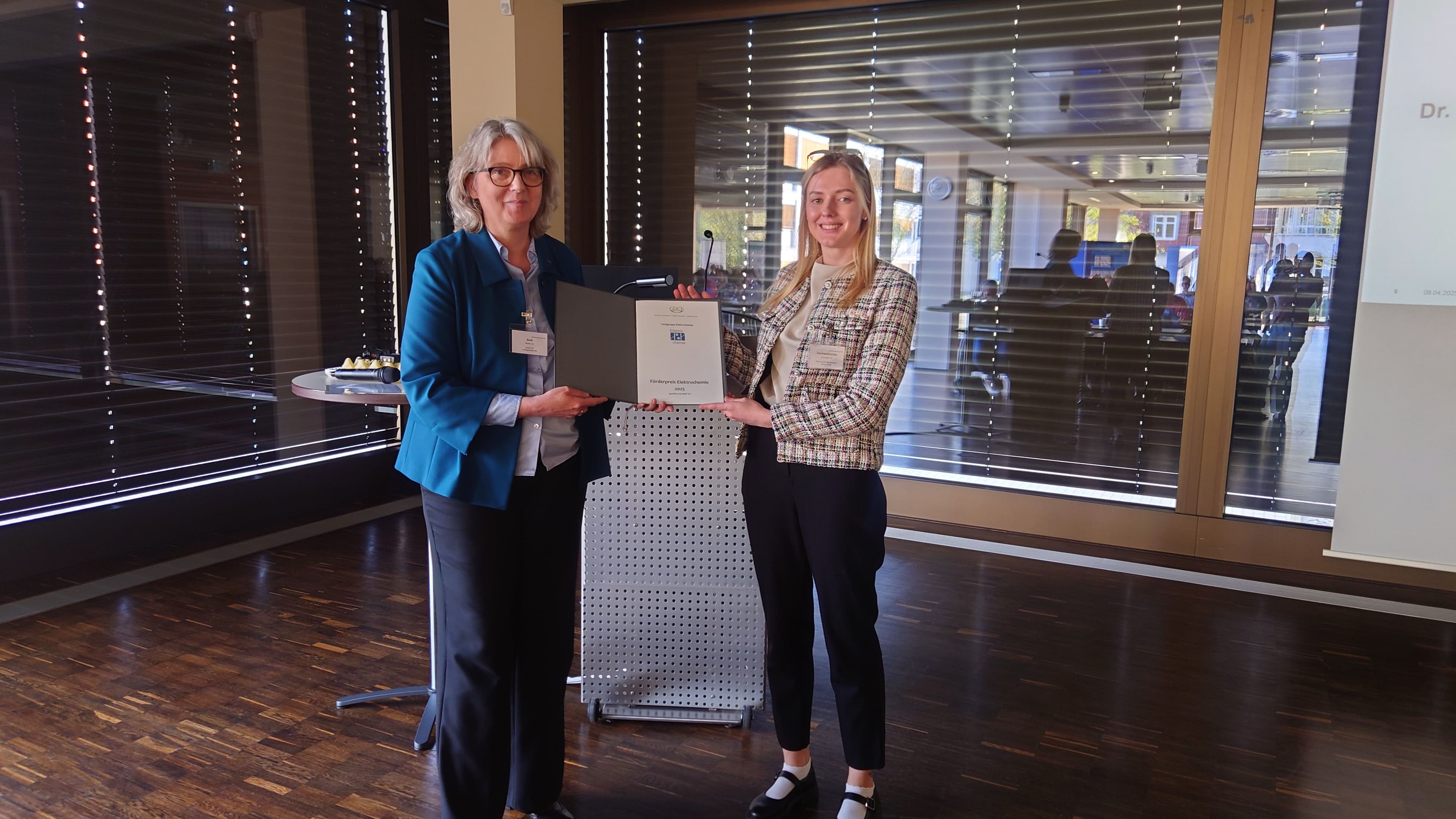
The Young Scientist Award, sponsored by BASF SE, was presented on 9 April 2025 at the Division conference 2025, Green Energy Transformation - GET It Done, to Dr. Ieva Agnė Cechanavičiūtė in recognition of her outstanding dissertation entitled: "Compositionally Complex Materials as Electrocatalysts for Energy Conversion Reactions", which she wrote in the working group of Prof. Dr Wolfgang Schuhmann at Ruhr-Universität Bochum.
"Ms Cechanavičiūtė dealt with various reactions on the subject of hydrogen economy. The dissertation addressed various points, such as the investigation of multi-metal materials, different catalyst synthesis techniques and electrode designs. She succeeded in further developing an aerosol-based synthesis method in such a way that scalable production of multinary catalyst powders became possible. This means that promising catalyst compositions discovered in high-throughput screenings can be transferred to catalyst powders and tested. The investigations into the oxidation of gaseous ammonia are particularly noteworthy. Ms Cechanavičiūtė was able to show that oxidation to nitrite is possible without substantial formation of nitrogen or oxygen. The jury was also very impressed by Ms Cechanavičiūtė's ability to present complex relationships clearly and comprehensibly. This resulted in an extremely concise and content-rich dissertation."
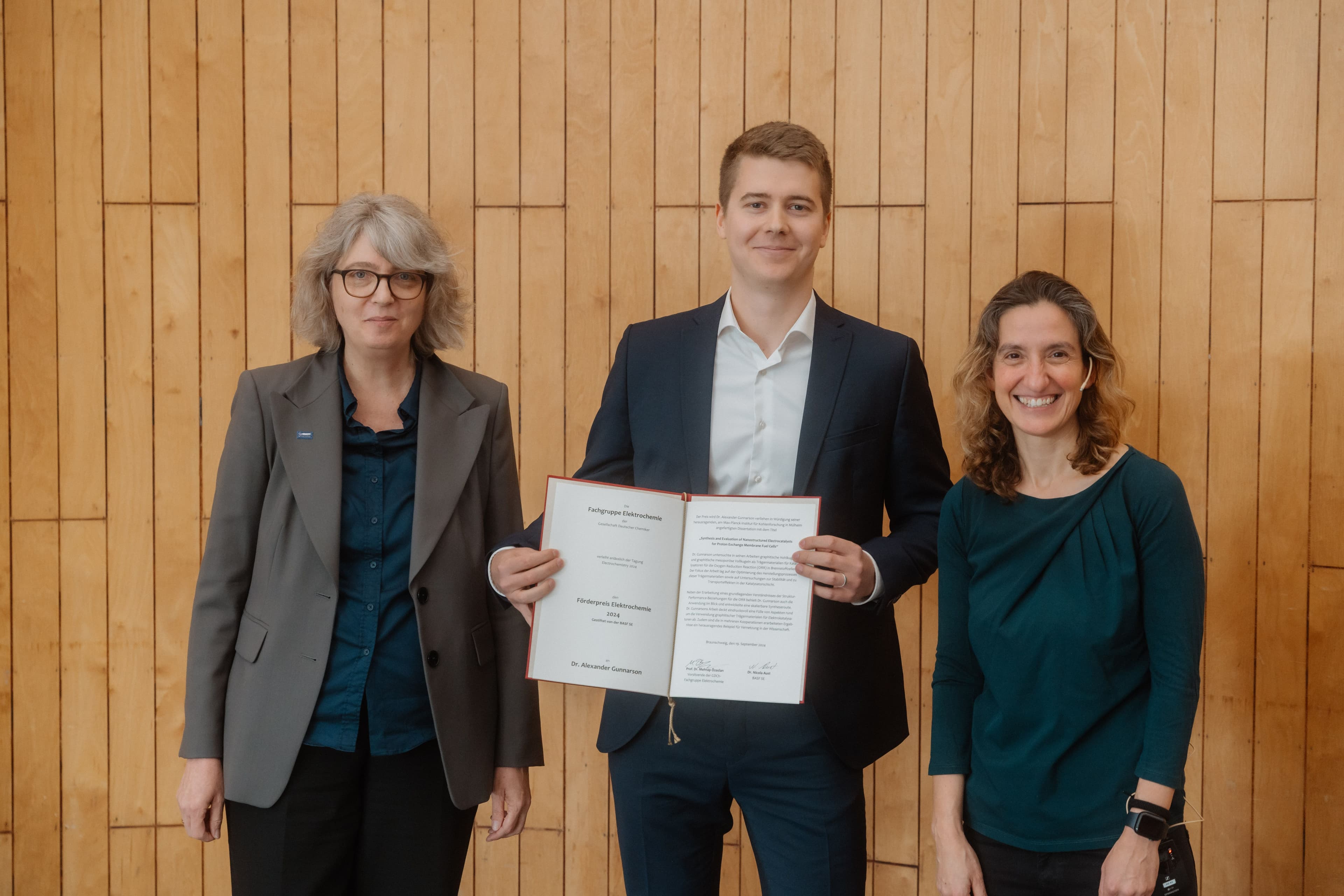
The Young Scientist Award, sponsored by BASF SE, was presented on the occasion of the Conferences Electrochemistry 2024 to Dr. Alexander Gunnarson in recognition of his outstanding dissertation entitled: "Synthesis and Evaluation of Nanostructured Electrocatalysts for Proton Exchange Membrane Fuel Cells"
"Dr. Gunnarson investigated graphitic hollow spheres and graphitic mesoporous solid spheres as support materials for catalysers for the oxygen reduction reaction (ORR) in fuel cells. The focus of the work was on the optimisation of the manufacturing process of these carrier materials and on investigations into the stability and transport effects in the catalyst layer. In addition to developing a fundamental understanding of the structure-performance relationships for ORR, Dr Gunnarson also kept an eye on the application and developed a scalable synthesis route. Dr Gunnarson's work impressively covers a wealth of aspects surrounding the use of graphitic support materials for electrocatalysts. In addition, the results obtained in several collaborations are an excellent example of networking in science.
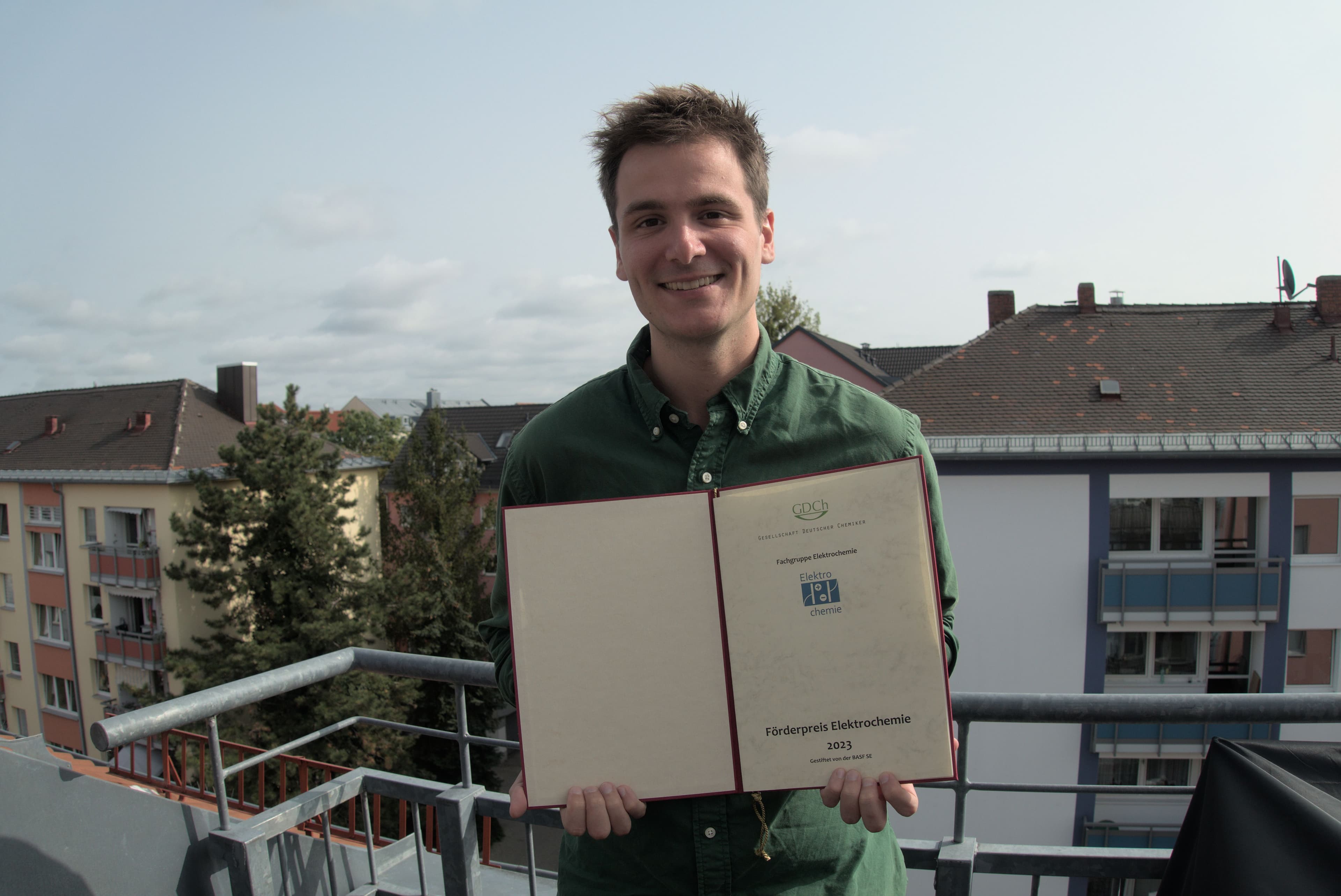
The Young Scientist Award, sponsored by BASF SE, was presented at the GDCh Science Forum Chemistry in Leipzig to Dr. Marvin Cronau in recognition of his outstanding dissertation completed at the Philipps University of Marburg entitled: "Synthesis, characterisation and optimisation of new materials for use in high-performance lithium-ion and lithium solid-state batteries"
"Dr. Cronau investigated the optimisation of the energy density of lithium-ion batteries by increasing the layer thickness of the electrodes. Various parameters for the resulting necessary reduction in cell resistance were evaluated." In the second part of his work, which is particularly noteworthy, Dr Cronau dealt with lithium solid-state batteries. Here he succeeded in revealing and demonstrating the dependence of the ionic conductivity of sulphide solid electrolytes on the manufacturing pressure of the sample and on the measurement pressure. The previously unknown qualitative differences in the pressure dependence of the ionic conductivity of amorphous and glass-ceramic samples compared to microcrystalline samples are of great importance for the further development of this type of battery. Furthermore, his findings can contribute to a better comparability of published ionic conductivities. In addition to the excellent scientific results, which were incorporated into this extremely clear dissertation with very good graphics, Dr Cronau also took into account the classification of his research for large-scale application."
The Young Scientist Award was presented on the occasion of the Conferences Electrochemistry 2022 in Berlin to Dr. Matthäus Siebenhofer in honour of his outstanding dissertation completed at the Vienna University of Technology entitled: "Investigating Point Defect Concentrations and Their Impact on Surface Exchange Reaction Rates of Mixed Ionic and Electronic Conductors".
"Understanding the oxygen exchange reaction at the surface of mixed ionic and electronic conductive oxides such as lanthanum strontium cobalt oxide or strontium titanium oxide is essential for their further development for solid oxide fuel cells, sensors and capacitors. By introducing a new method, in-situ impedance spectroscopy during pulsed laser deposition, oxide thin films can be investigated directly after their deposition. Dr. Siebenhofer was able to demonstrate for the first time that these are initially considerably more exchange-active than previously known, but are then subject to rapid degradation due to coverage with sulphur adsorbates. The new experimental approach made it possible to determine concentration-independent activation energies for oxygen incorporation and removal. Together with defect chemical model calculations, a mechanism for the oxygen exchange reaction of mixed conductors could thus be derived and validated. It also impressively demonstrated how the oxygen stoichiometry of strontium titanium oxide is already influenced by the UV light of the plasma torch during pulsed laser deposition."
The Young Scientist Award was presented to Dr Johannes Ludwig Röckl in recognition of his publication prepared in the working group of Prof Dr Siegfried Waldvogel at Johannes Gutenberg University Mainz: "Merging shuttle reactions and paired electrolysis for reversible vicinal dihalogenations".
."Vicinal dibromides and dichlorides are widely used as flame retardants, pesticides, polymers and pharmaceuticals; their efficient extraction without the use of highly reactive and corrosive halogenation reagents has not been successful so far. Only the skilful combination of electrochemistry and synthesis achieved a breakthrough. The electrochemical reduction of aliphatic polyhalogen compounds with subsequent anodic oxidation of the released halide and its addition to double bonds developed by Mr Röckl is a new concept with broad application possibilities. With his "E-Shuttle" approach, Mr Röckl shows how landfill residues of the toxic insecticide lindane can be used to produce new valuable products. Traditional energy-intensive and technically complex degradation processes can be replaced by the new process."
With his work, Mr Röckl is making an important contribution to sustainable, electricity-based chemistry, which can help to eliminate persistent industrial contaminants."
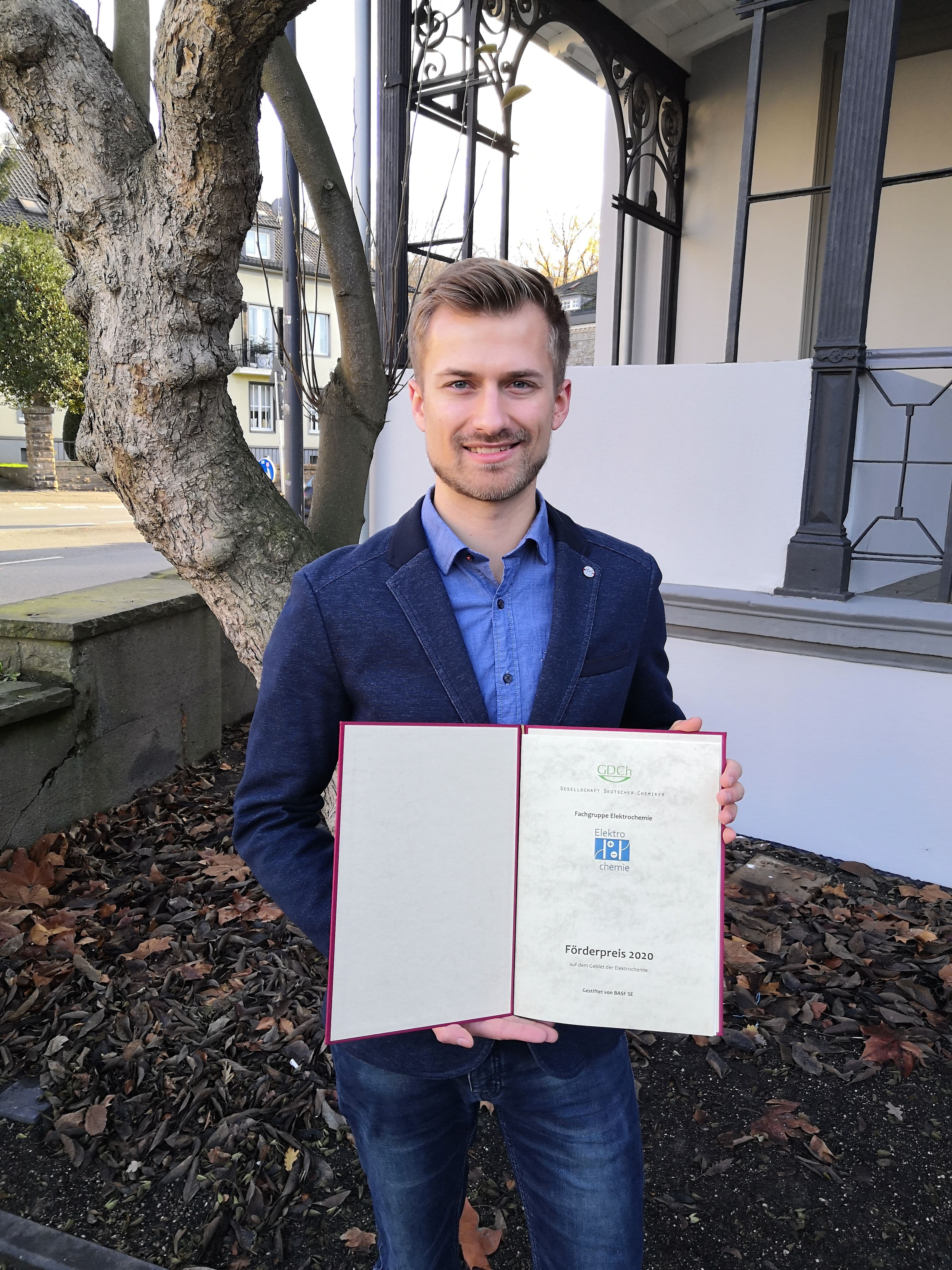
The Young Scientist Award was presented to Tobias Löffler in recognition of his publication entitled: "Design of Complex Solid-Solution Electrocatalysts by Correlating Configuration, Adsorption Energy Distribution Patterns, and Activity Curves" published in February 2020 in the journal Angewandte Chemie International Edition.
High entropy alloys, in which five or more elements are present in a complex single-phase solid solution, form a variety of combinations of electrocatalytically active centres that overcome the limitations of catalyst combinations of individual elements. Tobias Löffler developed a concept that correlates the composition of a solid solution with the distribution pattern of adsorption energies and thus enables the derivation of electrochemical activity curves. The concept was verified by investigating oxygen reduction under alkaline conditions as a model reaction using selected catalyst combinations. This also makes it possible to limit the high screening effort of catalysts to the selection of meaningful element configurations.
The work contributes to the gain in understanding and reduces the future experimental effort for the synthesis and testing of electrocatalysts for the various applications of the promising substance class of high-entropy alloys.
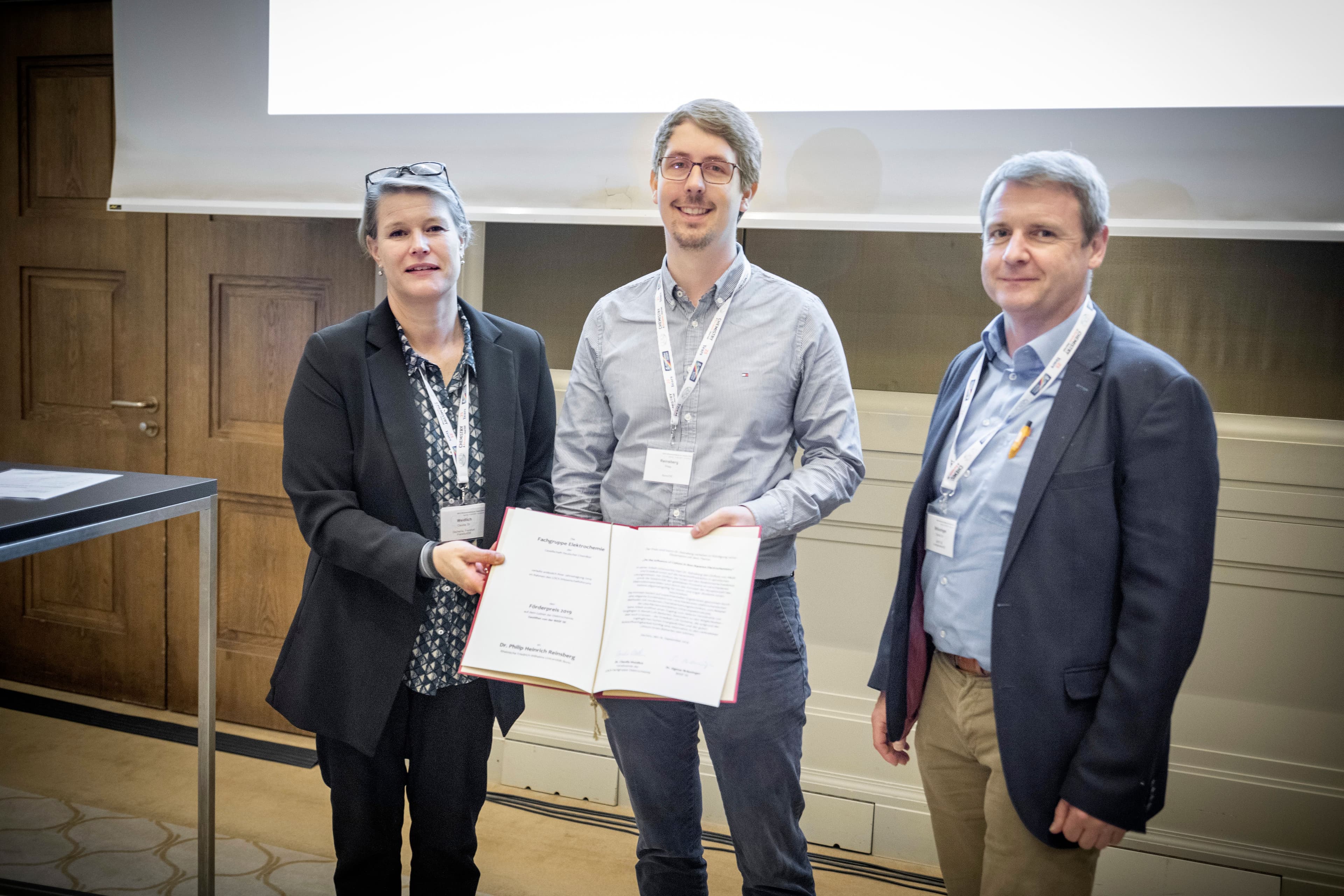
The Young Scientist Award was presented to Dr Philip Heinrich Reinsberg for his outstanding dissertation on the topic: "On the Influence of Cations in Non-Aqueous Electrochemistry" at the 2019 Annual Meeting as part of the GDCh Science Forum in Aachen.
The Young Scientist Award was presented to Dr Philip Heinrich Reinsberg for his outstanding dissertation on the topic: "On the Influence of Cations in Non-Aqueous Electrochemistry" at the 2019 Annual Meeting as part of the GDCh Science Forum in Aachen.
In his work, Philip Reinsberg investigated the influence of alkali and alkaline earth ions on oxygen reduction in aprotic solvents. The influence of the ions on the reaction mechanism as well as the selectivity of the formed products at different electrode materials is described by the concept of the acceptor number of the cation generally valid for mono- and even divalent ions. The concept is based on experimental results obtained by an elegant combination of various electrochemical methods with modern characterisation techniques, for example surface-enhanced infrared spectroscopy. His work opens up access to a deeper understanding of processes in metal-air batteries, especially the possibilities - but also limitations - of alkaline earth-air systems, which could be an alternative to the widespread lithium-ion batteries in the future due to the accessible high energy densities and the good availability of raw materials.
| 2025 | Dr. Ieva Agnė Cechanavičiūtė | Green Energy Transformation - GET It Done (Duisburg) |
| 2024 | Dr. Alexander Gunnarson | Electrochemistry 2024 (Braunschweig) |
| 2023 | Dr Marvin Cronau | GDCh Science Forum Chemistry 2023 (Leipzig) |
| 2022 | Dr. Matthäus Siebenhofer | Electrochemistry 2022 (Berlin) |
| 2021 | Dr. Johannes Ludwig Röckl | GDCh-Wissenschaftsforum Chemie 2021 (online) |
| 2020 | Tobias Löffler | Electrochemistry Undercover 2020 (online) |
| 2019 | Dr. Philip Heinrich Reinsberg | GDCh Science Forum Chemistry 2019 (Aachen) |
| 2018 | Dr. Simon Geiger, Erlangen-Nuremberg | Electrochemistry 2018 (Ulm) |
| 2017 | Johannes Wandt, Munich | GDCh Science Forum Chemistry 2017 (Berlin) |
| 2016 | Dr. Heinz Bülter, Oldenburg | Electrochemistry 2016 (Goslar) |
| 2015 | Dr Karin Kleiner, Karlsruhe | Annual conference 2015 (Dresden) |
| 2014 | Dr. Pascal Hartmann, Gießen | Electrochemistry 2014 (Mainz) |
| 2013 | Dr. Andreas Lesch, Oldenburg Angel A. Topalov, Düsseldorf | Annual Conference 2013 (Darmstadt) |
| 2012 | Dr. Susanne Zils, Darmstadt Dr KristinaTschulik, Dresden | Electrochemistry 2012 (Munich) |
| 2011 | Dr. Jörn Kulisch, Karlsruhe Alexander Opitz, Vienna Germán José Soldano, Ulm | Annual Conference 2011 (Bremen) |
| 2010 | Dr. Sascha E. Pust, Odenbug | Electrochemistry 2010 (Bochum) |
| 2009 | Dr. Falk Harnisch, Greifswald | Annual Conference 2009 (Frankfurt) |
| 2007 | Dr. Itamar Malkowsky, Mannheim | Annual Conference 2007 (Ulm) |
| 2005 | Dr. Stephan Lütz, Jülich | Annual conference 2005 (Düsseldorf) |
| 2003 | Dr. Stefanie Meier, Münster | Annual Meeting 2003 (Munich) |
| 1999 | Dipl.Chem. Andreas Vogel, Düsseldorf | Annual Conference 1999 (Freiberg) |
| 1997 | Dr. Martin Winter, Graz | Annual conference 1997 (Vienna) |
| 1994 | Dr. Udo Schmiemann, Bonn | Annual Conference 1994 (Dresden) |
| 1991 | Dipl.Phys. Klaus Rühling, Kassel | Jahrestagung 1991 (Ludwigshafen) |
| 1989 | Dr. Thomas Pienemann, Hamburg | Annual conference 1989 (Stuttgart) |
| 1987 | Dr. Lothar Elfenthal, Düsseldorf | Annual Conference 1987 (Frankfurt am Main) |
| 1985 | Dr Johannes Willsau, Bonn | Annual Conference 1985 (Düsseldorf) |