
Career
Career orientation
Job market
Salary information and income survey
Academy
Mentoring
Education
Learners and trainees
Students and doctoral candidates
Teachers
University statictics
Scholarships
Discover
Top topics
Nachrichten aus der Chemie
Brochures and scientific publications
Fascination with chemistry
Statements and position papers
Press releases
Events
Conferences
Local events
Academy
Awards
Prizes
Historical sites of chemistry
About
Board and other bodies
Office
Statutes
Angewandte Chemie and Chemistry Europe
Foundations
ChemRXiv
Community
Divisions
Local Sections
Regular's table
Chem_Connect
Equal opportunities, diversity
International activities and cooperations
Membership
Biography: Kornfeld
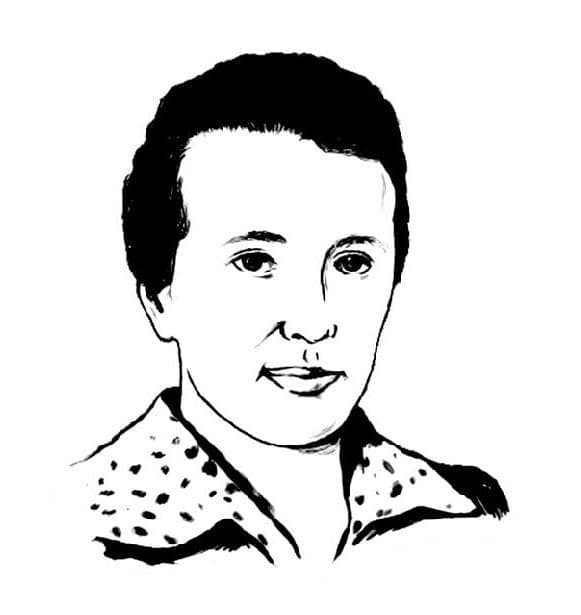
After the National Socialists stripped her of her teaching licence, it was impossible for Gertrud Kornfeld to continue her academic career. She emigrated to the USA and carried out research for the photographic film manufacturer Eastman Kodak until the end of her life.
Gertrud Kornfeld was born on 25 July 1891 in Prague. As the daughter of a German-speaking Bohemian family of factory owners who belonged to the upper Jewish middle class, she received an excellent school education. Having passed the Austrian Abitur, she finally met the requirements for university study.
From 1910 to 1915, Kornfeld studied chemistry, physical chemistry and physics at the German-speaking Charles-Ferdinand University in Prague. From 1914, she conducted research there in the working group led by her mentor Viktor Rothmund (1870–1927), who focused primarily on the electrochemical reduction and the so-called passivity of metals. Kornfeld was awarded her doctorate in 1915 with a thesis on ‘Hydrates in Solution’ and worked as an assistant at the Department of Chemistry at Prague University until 1918 or 1919 (see note below). With the outbreak of the First World War, female scientists at several German universities were finally permitted to hold academic posts. During this period, Kornfeld deepened her knowledge of chemical reaction kinetics, a field of research that was then emerging.
As Kornfeld belonged to Prague’s German-speaking population, she left the city in 1919 following the establishment of Czechoslovakia. As a former assistant to Rothmund, she was immediately offered a research assistant post with Max Bodenstein (1871–1942) at the Technical University of Hanover, where she remained until 1923 or 1925 (see note below). Bodenstein is regarded as one of the founders of chemical reaction kinetics. He primarily researched light-induced chain reactions such as the chlorine-explosive gas reaction, in which hydrogen chloride is formed from the elements. In addition, he made further important contributions to photochemistry. Both fields – photochemistry and reaction kinetics – now also formed the focus of Kornfeld’s research.
In 1923, Bodenstein was appointed to a post in Berlin as the successor to Nobel laureate Walther Nernst (1864–1941), and Kornfeld moved with him to the Institute of Physical Chemistry at the university there. In 1928, she obtained her habilitation in chemistry in Berlin. She continued to work as Bodenstein’s assistant, supervised several doctoral theses and fulfilled her teaching duties with great enthusiasm. Kornfeld was equally successful in her research: around 1929, she developed the membrane manometer, which measures pressures up to 16 millibars. It works by the gas pressure bending a thin sheet of metal, thereby moving a pointer.
Alongside her successes, Kornfeld faced many disappointments and frustrations, which ultimately made a university career impossible. After the Nazis had revoked her teaching licence in the autumn of 1933, the chemist, now aged 42, travelled spontaneously to England with the help of a scholarship. She conducted research at the University of Nottingham and at Imperial College London, but without securing a permanent post. She never attained in Britain the relatively high position in academia that she had once held in Berlin. Supported by a further scholarship, she worked at the University of Vienna until 1936. From there, she emigrated to the USA in 1937 on a visitor’s visa.
In the United States, too, Kornfeld was unable to continue her academic career. She took up a post as a research chemist at Eastman Kodak in Rochester, New York. She worked for the manufacturer of films and other photographic equipment until the end of her life. In 1943, Kornfeld was granted American citizenship. She never married.
Kornfeld gained experience in both the academic and industrial aspects of her profession and is undoubtedly one of the outstanding female chemists of the first half of the 20th century. Her early research was groundbreaking for photochemistry, yet she was not able to build on these successes in the later stages of her life. Gertrud Kornfeld died in the summer of 1955 in Rochester (USA), a few weeks before her 64th birthday.
Sources
A. Vogt: From the Back Entrance to the Main Entrance? Lise Meitner and her female colleagues at the University of Berlin and the Kaiser Wilhelm Society, Franz Steiner Verlag, Stuttgart, 2007
H. Walter: Kornfeld, Gertrud. In: Neue Deutsche Biographie (NDB), Volume 12, p. 590, Duncker & Humblot, Berlin, 1980
www.hu-berlin.de/de/ueberblick/geschichte/wissenschaftlerinnen/kornfeld
Note: differing details in various sources
Authors
Prof. Dr Eberhard Ehlers
Prof. Dr Heribert Offermanns
Editorial processing
Dr Uta Neubauer
Project management
Dr Karin Schmitz (GDCh public relations)
The authors are responsible for the content of the biographies.
The content presented on these pages has been carefully compiled. Nevertheless, the authors, Editorial staff and publisher accept no responsibility or liability for the completeness and accuracy of the content or for any typographical errors.