
Career
Career orientation
Job market
Salary information and income survey
Academy
Mentoring
Education
Learners and trainees
Students and doctoral candidates
Teachers
University statictics
Scholarships
Community
Divisions
Local Sections
Regular's table
Chem_Connect
Equal opportunities, diversity
International activities and cooperations
Membership
Discover
Top topics
Nachrichten aus der Chemie
Brochures and scientific publications
Fascination with chemistry
Statements and position papers
Press releases
Events
Conferences
Local events
Academy
Awards
Prizes
Historical sites of chemistry
About
Board and other bodies
Office
Statutes
Angewandte Chemie and Chemistry Europe
Foundations
ChemRXiv
Biography Geldmacher-von Mallinckrodt
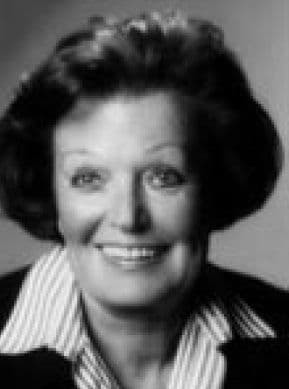
She was a professor at the University of Erlangen, had two doctorates and five children: toxicologist Marika Geldmacher-von Mallinckrodt succeeded in detecting traces of the insecticide parathion in the blood, a once widely used drug for murder.
Marika Geldmacher-von Mallinckrodt (née Mallinckrodt-Haupt) was born in Potsdam on 28 April 1923. She was the eldest of five children of the head forester Johann Dietrich von Mallinckrodt and the well-known dermatologist Asta von Mallinckrodt-Haupt (1896-1960), who became Germany's first female professor of dermatology in 1941. When the Second World War broke out, Marika was visiting her grandmother in Bamberg with one of her brothers. Her mother was in the USA and her father decided that the two children should not return to Cologne, where the family lived at the time, because of the war. In March 1940, the almost 17-year-old passed her Abitur at the Neues Gymnasium in Bamberg. She was then drafted into the Reich Labour Service. She dreamed of studying medicine, but would have had to do an extra four weeks of labour service, which she did not like at all. She therefore studied chemistry in Cologne and Munich from 1940.
In December 1942, she met Herbert Geldmacher, a civil engineer with a doctorate, whom she married in 1943. Geldmacher-von Mallinckrodt passed her diploma examination in Munich in 1944. However, her subsequent doctorate did not make much progress. For one thing, the young chemist had had her first child in the meantime, and for another, working and living conditions in Munich were deteriorating, as both the chemistry institute and her flat were badly damaged by bombs.
Geldmacher-von Mallinckrodt fled with her child to her grandmother in Bamberg, where her second child was born in 1945. At the University of Erlangen, she attempted another doctorate, this time successfully, with Alwin Meuwsen, a well-known inorganic chemist. He is said to have said: "Mrs Geldmacher, she may have deceived me, she hid the fact that she had two children! If I had known that, I wouldn't have taken her on." Geldmacher-von Mallinckrodt was awarded her doctorate on 1 July 1948.
Since, from her point of view, there were no jobs for female chemists in the chemical industry at the time except in libraries, Geldmacher-von Mallinckrodt enrolled to study medicine at the University of Erlangen in 1949. In July 1954, she was awarded her doctorate again, this time in medicine. She gave birth to her third child in the same year, her fourth in 1957 and her fifth in 1966. Obviously, the two-time doctor succeeded in harmonising work and family life. From 1954 to 1963, she worked as a research assistant at the University of Erlangen, most recently at the Institute of Forensic Medicine and Criminology. In 1964, she was awarded the right to teach forensic chemistry, six years later she was awarded a professorship and finally a C3 chair in 1978.
Geldmacher-von Mallinckrodt developed the Institute of Forensic Medicine at the University of Erlangen, where she worked for a total of 25 years, into an important centre for clinical-toxicological analysis with funding from the German Research Foundation. She earned great recognition for developing the detection of minute quantities of the insecticide parathion (E 605) in blood, a once widely used agent for murder and suicide. In addition to forensic toxicology and forensic and clinical toxicological analysis, ecogenetics was one of her main areas of research. This subject deals with the genetically determined reactions of the human organism to environmental influences.
In 1985, Geldmacher-von Mallinckrodt was awarded emeritus status. More than 130 publications and numerous textbooks testify to her scientific creativity. In 1987, she was awarded the Federal Cross of Merit on Ribbon for her research results in analytics and toxicology. Marika Geldmacher-von Mallinckrodt died at the age of 93 on 23 December 2016 in Erlangen.
Sources
German Chemical Society (GDCh): Chemikerinnen - es gab und es gibt sie, 2003, p. 32
S. M. Schwarzl, Nachrichten aus der Chemie 51, 2003, p. 732
Authors
Prof. Dr Eberhard Ehlers
Prof. Dr Heribert Offermanns
Editing
Dr. Uta Neubauer
Project management
Dr. Karin J. Schmitz (GDCh public relations)
The authors are responsible for the content of the biographies.
The content presented on these pages has been carefully compiled. However, the authors, Editorial staff and publishers assume no responsibility or liability for the completeness and accuracy of the content or for typographical errors.